
Benefits of Public Speaking How to Build Confidence and Transform Your Career

Updated: Jan 28
Standing in front of people and sharing your ideas can feel scary. Your hands might shake. Your voice might tremble. Your mind might go blank. But here's something important:
public speaking is not just about talking to a crowd. It's about unlocking doors you never knew existed in your career and life.

Every day, people just like you avoid chances to speak up. They skip promotions. They hide in meetings.
They let fear make their choices. But what if you could change that? What if speaking in public became your secret weapon instead of your biggest fear?
The benefits of public speaking reach far beyond the stage.
They touch every corner of your professional life and personal growth. When you learn how to be confident in public speaking, you don't just become a better presenter. You become a better leader, a stronger communicator, and someone people want to follow.
What Public Speaking Really Means
Public speaking is any time you share your thoughts with others in a formal way. This happens when you present at work, speak at a wedding, lead a meeting, or talk at a conference. Even chatting with a small group can count if you're the one leading the conversation.
Many people think they need to be a highly skilled public speaker before they start. That's wrong. Everyone starts somewhere. The key is taking that first step and learning as you go.
Why Public Speaking Matters in
Today's World
We live in a time where your voice can reach millions. Social media, video calls, podcasts, and live events give everyone a platform. But having a platform means nothing if you can't use it well.
Companies today don't just want workers who can do tasks. They want people who can communicate, inspire, and lead. Leadership and public speaking training go hand in hand because great leaders must speak with clarity and power.
Research shows that communication skills rank as the top thing companies look for when hiring. Not computer skills. Not degrees. Communication. And at the heart of communication sits public speaking.
When you can stand up and speak your truth, people listen. When people listen, doors open. That's why mastering this skill changes everything.
Who Benefits from Public Speaking Skills
Everyone benefits. Yes, everyone. Here's who gains the most:
Business owners who want to attract clients and investors need strong presentation skills. Managers who lead teams must inspire and motivate through words. Salespeople close more deals when they speak with confidence. Teachers connect better with students through engaging delivery.
Even people in technical jobs like engineering or programming benefit greatly. Why? Because you need to explain your ideas to people who don't understand the technical details. A voice coach for public speaking can help you translate complex thoughts into simple, powerful messages.
Career switchers use speaking skills to show they can adapt and lead. Job seekers impress in interviews when they present themselves well. Entrepreneurs pitch their businesses and win funding through compelling speeches.
If you want to grow in any direction, speaking skills will take you there faster.
The Career Changing Benefits of Public Speaking
Building Unshakeable Confidence
Fear lives in the unknown. When you practice speaking in front of others, you face that fear head on. Each time you speak, you prove to yourself that you can do it. That proof builds confidence like nothing else can.
This confidence doesn't stay on the stage. It flows into every part of your life. You speak up more in meetings. You share ideas without hesitation. You stop second guessing yourself. How to be confident in public speaking becomes how to be confident in life.
Studies show that people who practice public speaking report higher self esteem. They feel more in control of their lives. They take on bigger challenges because they know they can handle pressure.
Advancing Your Career Faster
Want to move up in your company? Start speaking more. Leaders get noticed when they communicate well. Companies promote people who can represent them with skill and confidence.
When you become a highly skilled public speaker, you stand out from everyone else. You get asked to lead important projects. You get invited to represent your team at conferences. You become the person everyone turns to when something important needs to be said.
One survey found that strong speakers advance in their careers 50% faster than weak speakers. That's not a small difference. That's the difference between watching others succeed and creating your own success.
Consider joining programs like Marco Polito's 5-Day Public Speaking Challenge to jumpstart your speaking journey.
Improving Your Communication in Every Setting
Public speaking training teaches you to organize your thoughts clearly. You learn to structure messages so people understand and remember them. These skills transfer to emails, conversations, and everyday interactions.
You'll notice changes in how you communicate with your boss, your team, and your clients. Words flow more easily. You make your points faster. People understand you better.

Misunderstandings decrease.
Working with a voice coach for public speaking helps you control your tone, pace, and volume. These vocal skills make you sound more professional and trustworthy. People take you seriously when you speak with authority.
Expanding Your Professional Network
Speaking events create networking gold. After you present, people come up to talk with you. They remember you. They want to connect. These connections turn into partnerships, job offers, and business deals.
When you speak at conferences or events, you position yourself as an expert. People see you as someone who knows their stuff. This expert status attracts opportunities like a magnet.
Your network grows not just in size but in quality. You meet other leaders, innovators, and decision makers. These relationships can change the trajectory of your entire career.
Explore corporate leadership coaching opportunities to connect with other professionals.
Enhancing Your Leadership Abilities
Every leader must communicate vision and inspire action. Leadership and public speaking training develop both skills together. You learn to motivate people through your words. You discover how to create a compelling message that moves teams forward.
Good leaders listen actively and respond thoughtfully. Public speaking practice teaches you to read your audience and adjust your message. This skill helps you connect with different types of people and situations.
Companies value leaders who can speak confidently to employees, investors, and customers. When you develop strong speaking skills, you develop leadership presence. That presence sets you apart and fast tracks you to senior positions.
Developing Critical Thinking and Research Skills
Preparing a speech forces you to research deeply. You need facts, examples, and evidence to support your points. This process sharpens your ability to find reliable information and think critically about topics.
You learn to analyze different viewpoints and build strong arguments. These thinking skills help in every aspect of work and life. Better thinking leads to better decisions.
Strong speakers know how to question assumptions and verify claims. They don't just repeat what they hear. They dig deeper and form their own conclusions. This intellectual rigor makes you valuable in any field.
How Public Speaking Works: The Learning Process
Starting Where You Are
You don't need to be perfect to begin. In fact, the best time to start is right now, with whatever skills you have. Every great speaker started as a nervous beginner.
Start small. Practice in low pressure situations first. Speak up more in meetings at work. Share stories with friends. Volunteer to give short updates to your team.
Join groups where others are learning too. Organizations like Toastmasters provide safe spaces to practice. You'll find people who understand your struggles because they face the same ones.
For personalized guidance, consider one-to-one public speaking coaching to master your unique voice.
Building Your Skills Step by Step
Learning to speak well follows a clear path. First, you work on structure. Every good speech needs a beginning, middle, and end. You learn to organize ideas so they flow logically.
Next, you develop your delivery skills. This includes your voice, body language, and presence. A voice coach for public speaking can help tremendously here. They teach you breathing techniques, vocal variety, and how to project your voice with power.
You also practice managing nervousness. Everyone feels nervous before speaking. The difference is that skilled speakers know how to channel that nervous energy into enthusiasm and passion.
Working with Professional Coaches
A highly skilled public speaker often works with coaches to refine their craft. Coaches provide feedback you can't get anywhere else. They spot habits you don't notice. They suggest improvements that make immediate differences.
Professional leadership and public speaking training programs offer structured learning paths. You work on specific skills in a logical order. You get expert guidance every step of the way.
Many executives invest in coaching to prepare for high stakes presentations. They know that the right coaching can make the difference between success and failure. If it works for them, it can work for you, too.
Programs like personal leadership coaching can transform your impact across all areas of communication.
Types and Formats of Public Speaking
Public speaking comes in many forms. Understanding each type helps you prepare better and choose the right approach.
Informative Speaking focuses on teaching your audience something new. You might explain a process, share research findings, or educate people about a topic. This type requires clear structure and simple language.
Persuasive Speaking aims to change minds or inspire action. Sales presentations, political speeches, and motivational talks fall into this category. Here, you need an emotional connection along with solid logic.
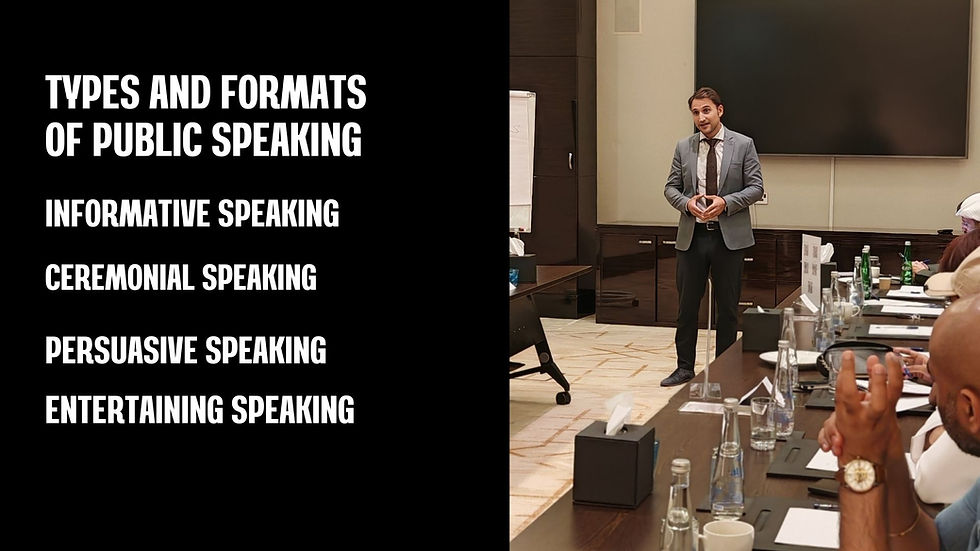
Entertaining Speaking keeps audiences engaged through humor and stories. Award shows, after dinner speeches, and some keynotes use this approach. Even serious topics benefit from entertaining elements.
Ceremonial Speaking marks special occasions like weddings, funerals, or graduations. These speeches honor people or events and require sensitivity and appropriate tone.
Each format serves different purposes. The best speakers can adapt their style to match the situation and audience.
Tools and Resources for Developing Your Speaking Skills
Practice Platforms and Communities
Toastmasters International provides regular practice opportunities worldwide. Members meet weekly to give speeches and receive feedback. This consistent practice builds skills faster than anything else.
Online courses and workshops offer flexible learning. You can study at your own pace and practice in private. Many programs include video feedback so you can see yourself and track improvement.
Local speaking clubs and meetup groups create supportive environments for beginners. You'll meet others on the same journey and build friendships while improving together.
Technology Tools
Recording your practice sessions helps you see what works and what doesn't. Your smartphone works perfectly for this. Watch yourself speak and note areas for improvement.
Presentation software like PowerPoint or Keynote helps structure your content visually. But remember: slides should support your message, not replace it. You are the star, not your slides.
Speech analyzers can measure your pace, filler words, and vocal variety. These tools provide data driven feedback that helps you improve faster.
Professional Training Programs
Structured training programs like those offered at Marco Polito provide comprehensive skill development. You learn from experienced coaches who have helped thousands of speakers transform their abilities.
These programs often include one on one coaching, group practice, and personalized feedback. The investment in professional training pays dividends for years to come.
Common Mistakes and How to Avoid Them
Over Preparing Your Words
Many beginners try to memorize every word. This backfires. When you forget a line, you freeze. Instead, memorize your structure and key points. Let the exact words come naturally.
Practice enough to feel confident but not so much that you sound robotic. Your audience wants an authentic connection, not a perfect recitation.
Ignoring Your Audience
Speaking to your audience instead of at them makes all the difference. Watch their reactions. Adjust based on their engagement. Ask questions. Create dialogue, not monologue.
The best speakers make every person feel like they're having a conversation. This connection turns good speeches into great ones.
Trying to Hide Nervousness
Fighting your nerves wastes energy. Instead, acknowledge them. Use breathing techniques to calm yourself. Channel that energy into enthusiasm.
Your audience wants you to succeed. They're rooting for you. Remember that, and your nervousness will decrease.
Speaking Without a Clear Purpose
Every speech needs a clear goal. What do you want your audience to think, feel, or do after hearing you? When you know your purpose, everything else falls into place.
Weak speakers ramble. Strong speakers drive toward a specific outcome. Be a strong speaker.
Making the Decision to Develop Your Speaking Skills
Understanding the Investment
Developing speaking skills requires time and effort. But compare that investment to the return. Better career opportunities. Higher income. Stronger relationships. Greater confidence.
The cost of not developing these skills is much higher. Missed promotions. Lost opportunities. Lingering fear. A smaller life than you deserve.
Choosing the Right Path for You
Some people learn best in groups. Others prefer private coaching. Some need structured programs. Others do well with books and self study.
Consider your learning style, schedule, and budget. Then choose the path that fits best. What matters most is that you start and stay consistent.
Setting Realistic Timelines
You won't become a master speaker overnight. Real improvement takes weeks and months of practice. But you'll notice changes quickly. After your first few practice sessions, you'll feel more comfortable.
After three months of regular practice, friends will notice the difference. After six months, you'll feel genuinely confident. After a year, speaking will feel natural.
Alternatives to Traditional Public Speaking
Not everyone needs to deliver keynote speeches. You can develop similar skills through different activities.
Video presentations let you practice speaking on camera. This works great for building comfort with being watched and heard.
Podcast hosting develops your vocal skills and conversational ability. You learn to engage listeners through voice alone.

Workshop facilitation teaches you to guide groups and handle questions. This builds interactive communication skills.
Team leadership requires daily communication that mirrors public speaking. Leading meetings and briefings develops many of the same abilities.
All these alternatives build confidence and communication skills. Choose activities that match your goals and comfort level.
Frequently Asked Questions About Public Speaking
How long does it take to become confident in public speaking?
Most people feel notably more confident after three to six months of regular practice. However, everyone progresses at their own pace. Consistency matters more than timeline. Practice weekly, and you'll see steady improvement.
Can naturally shy people become good public speakers?
Absolutely yes. Many of the world's best speakers describe themselves as naturally introverted. The key is learning techniques that work for your personality. Quiet confidence can be just as powerful as outgoing energy.
What if my mind goes blank during a speech?
This happens to everyone at some point. The solution is having notes with key points. Pause, breathe, check your notes, and continue. Your audience will barely notice. They're focused on your message, not your perfection.
Do I need expensive training to improve?
Not necessarily. Free resources like local speaking clubs, online videos, and practice with friends can take you far. However, professional coaching accelerates progress significantly. The investment often pays for itself through career advancement.
How do I handle difficult questions from the audience?
First, listen fully to the question. Pause to think before answering. It's okay to say "That's a great question. Let me think about that for a moment." If you don't know the answer, say so honestly and offer to follow up later.
Is public speaking only for certain careers?
No. Every career benefits from strong communication skills. Teachers, doctors, engineers, artists, managers, salespeople, and entrepreneurs all need to share ideas effectively. Speaking skills help in every profession.
What's the biggest mistake beginners make?
Trying to be perfect instead of being authentic. Your audience connects with real humans, not polished robots. Show your personality. Share your passion. Be yourself.
Taking Action on Your Public Speaking Journey
The gap between where you are and where you want to be shrinks with action. Reading about public speaking helps. But nothing replaces actual practice.
Start this week. Find one opportunity to speak up. Raise your hand in a meeting. Volunteer for a small presentation. Share a story at a social gathering. Take one step forward.
Next, find support. Join a speaking group or hire a coach. Don't try to do this alone. The fastest progress happens with guidance and community.
Set a specific goal. Maybe you want to deliver a confident presentation at work in three months. Perhaps you want to speak at an industry conference next year. Write down your goal and create a plan to reach it.
Remember why this matters. Public speaking skills open doors. They create opportunities. They transform careers and lives. The version of you who speaks confidently has access to possibilities the current you doesn't.
Your Next Steps to Speaking Success
You've learned about the incredible benefits of public speaking. You understand how to be confident in public speaking through practice and training. You know that becoming a highly skilled public speaker requires commitment, but delivers life changing results.
Now comes the most important part: action.
If you're serious about transforming your speaking abilities, consider professional guidance. Programs like Marco Polito's public speaking training provide the structure, feedback, and support you need to accelerate your growth.
Whether you choose group training, private coaching, or a combination approach, the investment in your speaking skills pays dividends for decades. Your voice matters. Your ideas deserve to be heard. Your career deserves to soar.
The only question left is: when will you start?
Don't let another day pass by watching others succeed while you stay silent. Don't let fear steal your opportunities. Don't settle for less than you're capable of becoming.
Take the first step today. Sign up for a workshop. Join a speaking group. Book a session with a voice coach for public speaking. Whatever you do, do something. Your future self will thank you.
Ready to transform your speaking skills and unlock your full potential? Visit Marco Polito and discover how expert leadership and public speaking training can change your career and life. Your voice has power. It's time to use it.



Comments